Our Work
Learn more about our beneficiaries, the mechanics of our Therapeutic Riding intervention, and the beneficial impact of The EARTH Centre’s School Programme on the lives and welfare of our beneficiaries, in the testimonials supplied by allied health professionals, school officials, and parents.

Our Beneficiaries
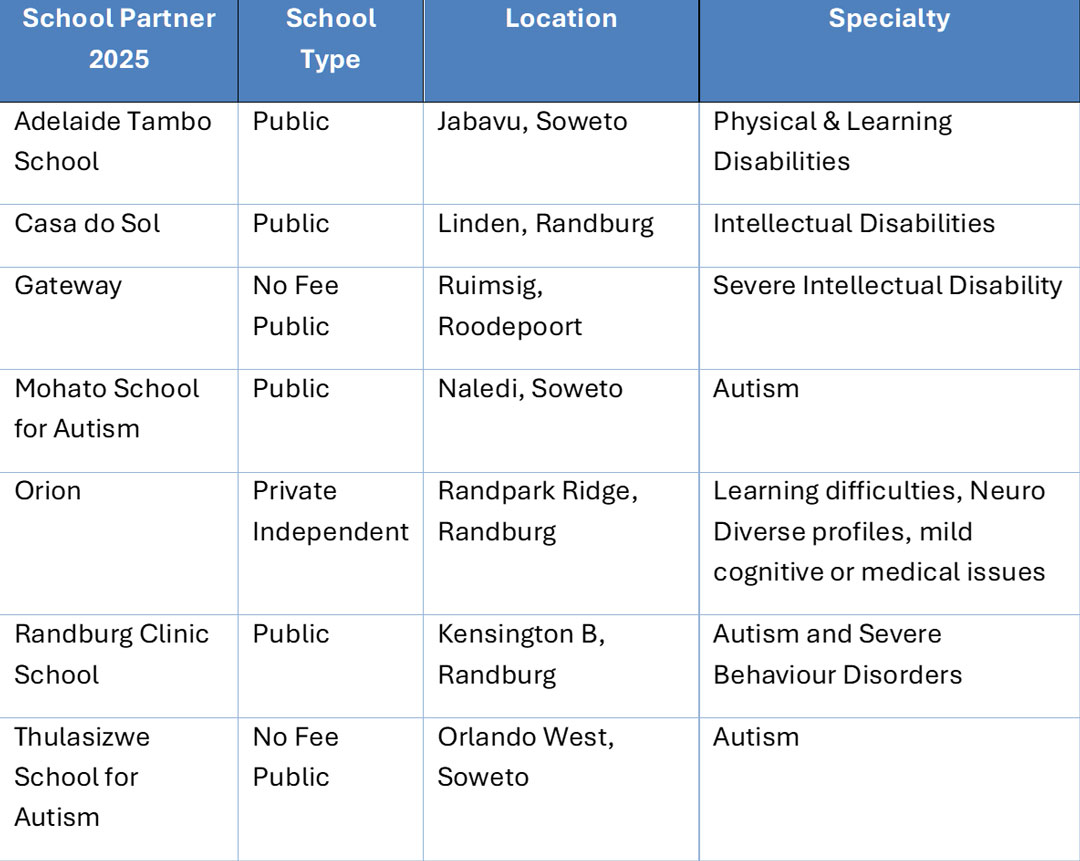
Our school programme beneficiaries are all learners from special needs schools in the Johannesburg area; and their journey to this adaptive educational environment was often fraught with delays with assessments and waiting lists.
Many come from single parent households, living in backyard rooms, sometimes at risk for abuse, often kept inside for their safety, and frequently often the source of family stigma and shame.
The children may be scarred by trauma and routinely experience high levels of distrust and fear and lack the voice to express it.
In a typical year, 86% of our beneficiaries are enrolled in public special needs schools, and a third of these are no fee schools; the children are 92% B-BBEE Black and two thirds are boys. These children are doubly disadvantaged, and their challenges and the threats to their welfare are immense.
Their specific physical, intellectual, neurological and/or behavioural impairments and disabilities are broad ranging and depend upon the specialities of our school partners in any given year.
In many cases, the school is providing their first exposure to any research based or supportive intervention; they are already six to eight years old and mostly unprepared to assimilate and benefit from a learning environment. This is where The EARTH Centre’s School Programme and our therapeutic riding intervention enters the lives of our beneficiaries.
Help these special children reach their full potential.
“The essential joy of being with horses is that it brings us in contact with the rare elements of grace, beauty, spirit, and fire”
Sharon Ralls Lemon
Our Intervention
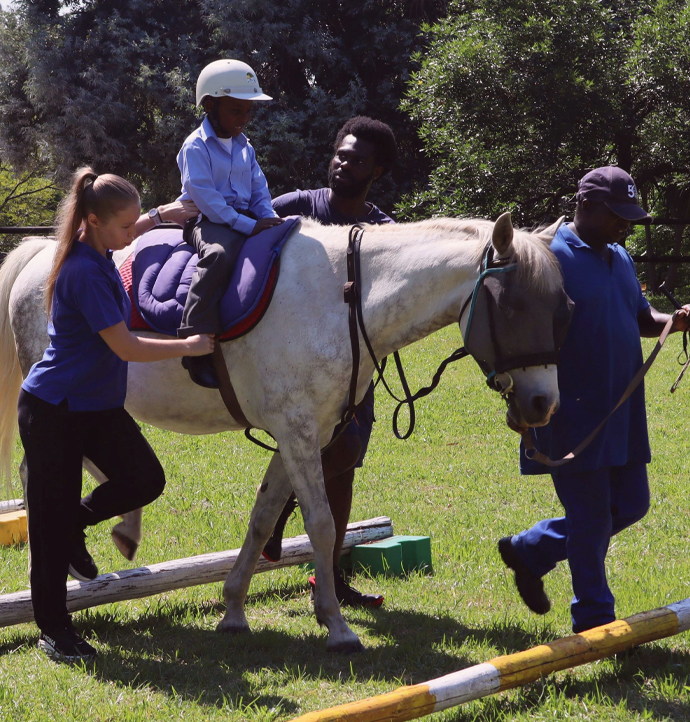
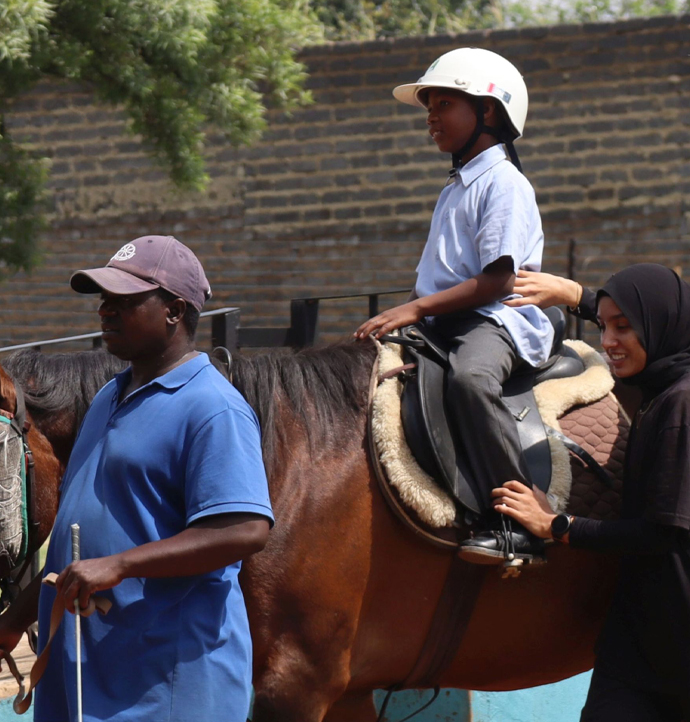
In the EARTH Centre’s school programme, the therapeutic riding process involves a SARDA-qualified instructor, trained therapy ponies, and trained volunteers - side walkers to support and engage the children with the lesson activities, and leaders to guide the horse though balanced transitions without interference. While on horseback, the child engages in lesson activities planned to promote skills development across multiple arenas: horsemanship, sensory integration, colour and number recognition, and fine and gross motor skills to name but a few. The EARTH Centre’s unique facilities are put to work: the sensory trail, the scent garden, obstacle trails and a range of activity stations challenge our riders and their neural pathways in a way that can be described as occupational therapy on horseback.
Riding a horse engages and challenges the vestibular Five organs in the inner ear make up the vestibular system. These structures detect head movements and gravity, providing crucial balance and spatial orientation information to the brain. and proprioceptive The proprioceptive system provides an internal awareness of body position, movement, and force, mediated by sensory receptors in muscles, tendons, and joints. It allows for the subconscious, automatic coordination of limbs, enabling precise motor control, posture, and spatial awareness. systems.
The 3-dimensional movement experienced on a horse at the walk improves balance, co-ordination, muscle tone and posture. It improves the quality of body movement, increases spatial awareness and symmetry, which in turn leads a reduction of disorientation and an increase in emotional well-being, particularly with children with neurodevelopmental disorders. In each weekly session, riders are evaluated and progress is tracked in terms of balance, posture and muscle tone, as well as range of motion, fine motor skills and co-ordination.
This multi-dimensional movement results in pelvic rotation similar to the pattern of movement of the human walk. Mounted on the horse, the rider’s weight is taken by his seat – i.e. the pelvis and not the legs, so that the rider’s muscles, joints and ligaments activated by the horse’s walk are the same that would be used if the rider himself were to walk. Hence the enormous value of the horse in stimulating the vestibular system, which works closely with the proprioceptive system, encouraging balance and equilibrium reactions leading to body and spatial awareness. No other therapy can provide this level of involuntary adjustment response in the rider in such a short time frame – roughly 1000 random movements every 10 minutes. Balance, muscle tone, co-ordination and posture are further challenged by instructor-led exercises on the moving horse (reaching up, down and across) exercises on the moving horse. Relaxation and gentle stretching of tight or spastic muscles is achieved through the combination of the warmth and energy of the horse’s body and the soothing, rhythmic movement.
Read More...
2025 Beneficiaries – Disability Demographics
ASD / Autism
Cerebral Palsy
Down Syndrome
Severe Intellectual Disability
ADHD
Speech Delay, Global Developmental Delay, Not Reported
Arthrogryposis
Charge Syndrome, Myotonic Syndrome, Spina Bifida, Hearing Impairment, Hunters Syndrome, Epilepsy
Why Riding Therapy encourages communication and social skills
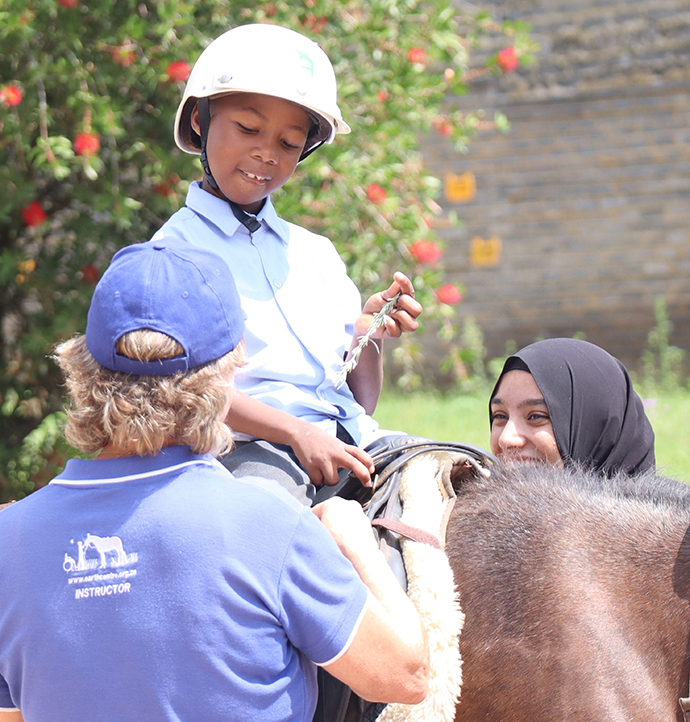
In the Riding Therapy context, relationship building is an unforced process, seamlessly built into the engagement routines of the side walkers and the dismount activities between horse and rider.
The role of the side walker, in addition to providing the child with any physical or balance support that is required for safety, is to assist the child with lesson instructions and activities as directed by the instructor. These engagements involve verbal instructions, gestures, demonstrations, gentle corrections and facial expressions as required by the abilities of the individual child. Horses are highly social animals that rely on body language and non-verbal cues when they interact with humans. Children with no words or few words are also heavily reliant on non-verbal cues for expression, and somewhere in this combination is a mutual understanding, trust, and a social connection. In each weekly session, the child’s intentional and contextual communication by whatever means (vocalisations, gesture, eye contact, touch, appropriate words) are rated and tracked for progress. Additionally, the child’s willingness for social engagements with volunteers and their therapy pony are tracked over time, ranging from disinterest, cautious curiosity, independent engagement and cooperation to active encouragement and appreciation of others.
Read More...
How Riding Therapy can develop confidence, self-esteem and independent decision making
Riding, and interaction with the therapy horse allows the child to discover the natural and frequently wonderful consequences of his actions in a non-judgemental and safe environment.
The rider learns signals for walk on, whoa, turn right and turn left, and the therapy horse responds to the rider with consistent clarity and honesty. As the rider is allowed to experiment within these natural boundaries, he or she develops confidence, a sense of mastery and improved self-esteem, which set the stage for independent decision-making and a willingness to engage in new activities and learn new things – the essential “readiness” milestones for their future educational development. Our “confidence” measure is tracked on a 5-point scale reflecting the degree of support or encouragement required for the rider’s engagement in the lesson activities and exercises.
Read More...
How Beneficiaries have the opportunity to develop horsemanship skills
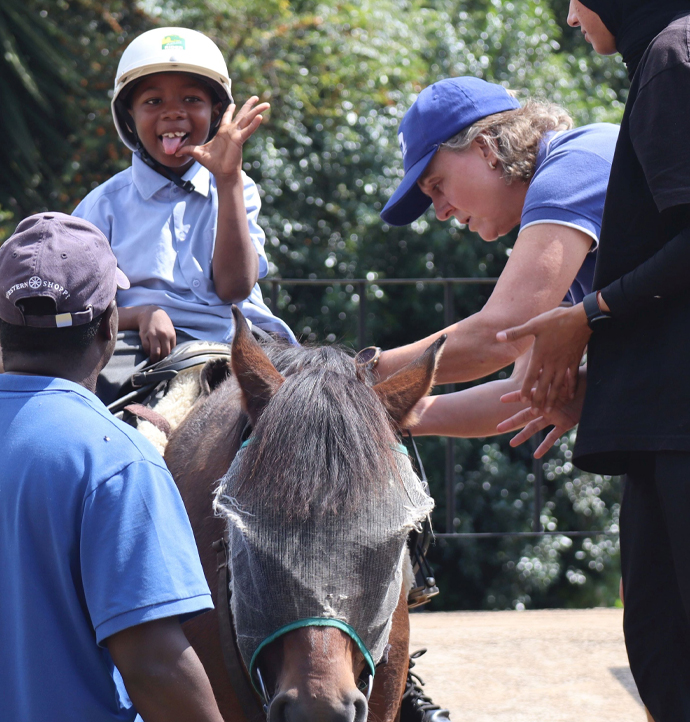
Over the course of an 8-to-10-week school term, or young learners can master basic horsemanship skills, and how to safely and effectively relate and communicate with the large, powerful, four-footed being that is the horse.
Good horsemanship starts with the ability to recognise and respect the horse, without fear and anxiety, as another complex being who is willing and able to communicate with you, the human. Horses are herd animals with a high concentration of mirror neurons. They have a great capacity for emotional intelligence and non-verbal communication, including the ability to read human cues, mirror emotional states, and offer empathic gestures, both on the ground and under saddle. This equine feedback, along with the prompts from the instructor and side walkers, form the foundation for the development of horsemanship skills. The EARTH Centre school programme riders start their EARTH Centre experience with no knowledge or understanding of how to relate to or communicate with a horse. Weekly assessments track their progress in terms how much prompting is required (or conversely, how much independence is displayed) in the correct use of aids and appropriate gestures to communicate with the horse.
Read More...
How Riding Therapy can have an impact on attention, focus and memory
The ability to recall instructions and information, as well as the ability to concentrate and focus attention on the task at hand are foundational skills required for any future learning effort. Therapeutic Riding plays a beneficial role in this cognitive development by promoting neuroplasticity through novel experiences, and by challenging the riders to do two things at once, e.g. balance on a moving horse and calling out or pointing to interesting objects on the sensory trail.
The mechanics of this impact are similar to what happens to cognitive function when an adult drives a new and unfamiliar route to work:
- The route is not routine, and the brain must go off “auto pilot” and form new neural pathways to effectively process the unfamiliar turns, landmarks and traffic conditions
- Exposure to novelty can trigger the release of dopamine, a neurotransmitter associated with pleasure and reward, which can enhance memory formation and the brain's overall capacity for learning.
The rider’s attention, focus and memory are assessed weekly by the degree of prompting, reminding or demonstration required for the child to carry out the riding and activity tasks presented to them in the course of the lesson.
Read More...
“For one to fly, one needs only to take the reins.”
Melissa James

Our Impact
Every child is different, and the benefits and impact of Therapeutic Riding will vary from child to child depending upon the nature of their neurodevelopmental challenges. Over the past five years, over 700 children have participated in our ten-week long school programmes, and the testimonial voices of their Occupational Therapists, Physiotherapists, school officials, and parents are the finest measure of impact of our programme on the physical and learning-readiness improvements experienced by these very special children.
Help us expand our capacity to impact the potential and wellbeing lives of more children.
Impact: Physical improvements in balance, co-ordination, posture, muscle tone and sensory integration.
“As therapists, we have identified improvements in trunk and postural tone and control, sensory regulation and processing, attention to task, verbal communication, avoidant and fleeting behaviour and gross motor participation.”
- J Robertson, OT, Thulasizwe School for Autism
"The most noticeable effects of horse riding [are] the improvement in muscle tone, … range of movement [and] improvement of balance and coordination through therapeutic exercises while on the horse.
"Many of learners struggle with stiffness in and around the pelvis. A horse’s movement which is 3-dimensional assists in mobilizing the rider’s pelvis in a gentle way. This assists in improving gait and posture.
"Holding onto the reins encourages Hemiplegic learners to use both hands and therefore encourages bilateral activity within function.“
- Ms CK Sennelo, Physiotherapist, Adelaide Tambo School (for the Physically Challenged)
“The horse-riding lessons have… improved their balance, coordination, and gross motor skills…”
- Collin Pillay, Randburg Clinic School
“Our learners have received the benefits of improved balance and co-ordination and an increase in general muscular strength… [horse riding] has impacted positively on our learners’ postural control and has improved handwriting skills.”
- Lantern School
“Within a few months of riding…[she] was able to walk on her own. The riding has assisted in building and strengthening her muscles, helped with her posture and importantly her gait. In addition, the bond she has formed with the horses has proven to be most therapeutic and assisted tremendously in building confidence and self-esteem.”
- Peter Owen-Jones
Read More...
Impact: Improvements in communication and social skills
“Some of our learners attending are on the Autism Spectrum and have difficulty with social interaction, using spoken language and even paying focussed attention to activities presented to them. With these learners the interaction noticed with the horses is phenomenal. We have had learners that have never had verbalization of words, giving verbal instructions to their horse such as “walk on” and “woah”. We have a learner that normally avoids visual tracking that is now tracking the hoses for a sustained period and without prompting.”
- Ms. A van Wyngaard, Occupational Therapist Gateway School
“We've seen our children develop meaningful relationships with the instructors and volunteers, who have become like a second family. The centre’s emphasis on social interaction, emotional regulation, and sensory integration has been invaluable.”
- Collin Pillay, Randburg Clinic School
“Weekly horse-riding sessions have encouraged Kaelo to socialise with her peers.”
- Nkhensani, Educator at Casa do Sol School
“Our kids look forward to every riding session with immense enthusiasm, and the carryover benefits to their daily life are evident. We’ve noticed improvements in their:
- Communication skills
- Emotional regulation
- Social interactions
- Self-confidence
- Overall well-being”
- Collin Pillay, Randburg Clinic School
Read More...
Impact: Noted improvements in confidence, self-esteem and independent decision making
“Our school caters for learners with special educational needs, barriers to learning and intellectual challenge. The horse-riding sessions are extremely beneficial; it builds self-esteem and encourages leadership skills."
- Goudveld Senior School
“We appreciate everything that [our instructor], the volunteers and Earth Centre provide to our learners. We look forward to watching our learners grow and gain more independence and opportunities to learn.”
- J Robertson, OT, Thulasizwe School for Autism
“The learners at Orion College love their outings to the Earth Centre, and the opportunity to be with the horses. We have seen many benefits, including:
- General overall confidence and increase in self-esteem
- Encourages speech and discussion, promoting general knowledge about horses and other animals
- Increased confidence around horses
- Helps children to learn to listen to instructions, and follow them
- General fun and enjoyment
- Promotes a feeling of accomplishment and freedom
- Helps improve balance and coordination"
- Barbara Robinson, Orion College Primary School Principal
Read More...
Impact: Multi-dimensional benefits and improvements at school and home
“Horse riding activities [have] been found to assist our learners with reducing anxiety and stress and promoting a calming atmosphere in the school and home environment. It has also increased the learner’s concentration by helping the body release tension."
- K Thanyani (Speech Therapist) Itireleng School for SID
“It is the best form of medicine I can give my son once a week. Ethan used to grind his teeth in his sleep and that has completely stopped. His aggression and aggressive responses have improved by 70%. Before horse riding his attention, span was very short, and that has improved dramatically. His level of speech was around 5% of what it should be and is now about 40%. Just before he started with EARTH Centre, he was moved out of the academic class, and will now be moved back in.”
- Rita Moller
Read More...
“There is something about the outside of the horse that is good for the inside of a man.”
Winston S. Churchill
How you can help
To fund the sustainability of our operations, and to continue to serve our communities, we rely on many volunteers, individual and corporate donors, affiliate organisations, fund raising events, corporate workshops, venue hire and the sale of compost and donated goods.
Support our programmes: